
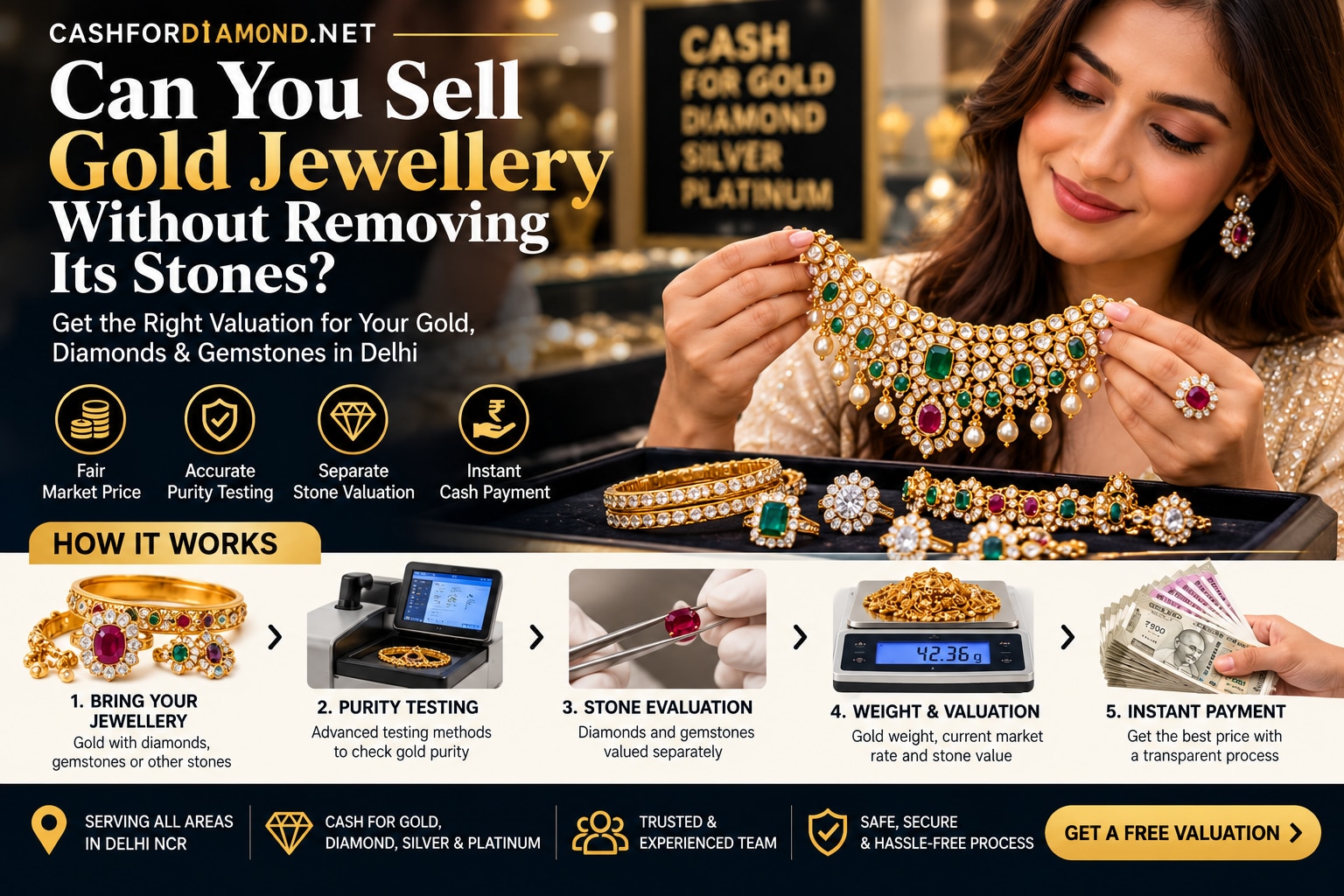
Gold jewellery often contains more than just gold. Many necklaces, rings, bangles and earrings feature diamonds, rubies, emeralds, pearls and other precious or decorative stones. These stones can make jewellery beautiful and valuable, but they can also raise an important question when you decide to sell it.
Can you sell gold jewellery without removing its stones?
The answer depends on the buyer's valuation process and the type of jewellery. Some buyers may assess jewellery with stones in place, while others may need certain stones to be removed to determine the net gold weight or evaluate the gold accurately.
If you are planning to sell gold jewellery with stones in Delhi, this guide explains how the process works, whether stone removal is necessary and what you should check before accepting an offer.
1. Can You Sell Gold Jewellery Without Removing Diamonds or Gemstones?
Yes, you can enquire about selling gold jewellery with its diamonds or gemstones still attached.
However, the buyer may need to assess the gold and stones separately, depending on the item and the valuation method.
Jewellery commonly sold with stones includes:
Diamond rings and engagement rings
Gold necklaces with diamonds
Ruby and emerald jewellery
Gold earrings with precious stones
Diamond bangles and bracelets
Traditional bridal jewellery
Gemstone pendants and necklaces
Some buyers may evaluate the entire piece, while others may calculate the gold value separately from the stones.
Before proceeding, ask whether the buyer accepts jewellery with stones and whether removal is necessary.
2. Why Do Some Gold Buyers Remove Stones Before Valuation?
There are several reasons why a buyer may recommend removing stones before calculating the gold value.
To determine the actual gold weight: The total weight of jewellery includes gold, stones and sometimes other materials. Removing non-gold components may help establish the net gold weight.
To assess gold purity: Depending on the testing method and jewellery design, stones or settings may need to be removed to obtain a suitable sample or more reliable assessment.
To evaluate stones separately: Diamonds and precious gemstones may have independent resale value. Separating them can make individual valuation easier.
To prepare jewellery for melting: If the gold is intended for recycling or refining, stones and other non-gold components generally need to be separated first.
Stone removal is not always necessary. For example, certain non-destructive gold testing methods can assess the metal without dismantling the jewellery.
3. Will Removing Stones Reduce the Value of Your Jewellery?
Removing stones does not automatically reduce the total value of your jewellery. However, the final amount depends on how the gold and stones are assessed.
Consider two separate components:
Gold value: Determined mainly by verified gold purity, net gold weight and the applicable gold rate.
Stone value: Depends on the type, quality, size, condition and market demand for the diamonds or gemstones.
If the buyer calculates only the gold content and does not purchase the stones, you should understand whether the removed stones will be returned to you.
Never assume that the quoted gold price includes the value of the diamonds or gemstones.
4. How Are Diamonds and Gemstones Valued Separately?
The valuation of stones depends on their characteristics.
Diamond Valuation
Diamonds are commonly assessed using the 4Cs:
Carat: The weight of the diamond.
Cut: How well the diamond has been cut and shaped.
Colour: The degree of colourlessness or presence of colour.
Clarity: The presence of internal inclusions and external blemishes.
Certification from a recognised gemological laboratory may help establish the diamond's characteristics, although a resale offer still depends on the buyer's assessment and market conditions.
Gemstone Valuation
Precious gemstones such as rubies, emeralds and sapphires may be assessed according to:
Type of gemstone.
Weight and size.
Colour and clarity.
Natural or treated status.
Origin, where reliably established.
Overall condition and market demand.
Not every gold buyer purchases gemstones separately. Ask about the buyer's stone valuation policy before agreeing to a transaction.
5. Can You Sell Old Gold Jewellery With Broken or Missing Stones?
Yes, you can enquire about selling old gold jewellery even if some stones are missing or damaged.
Examples include:
Gold rings with missing diamonds.
Earrings with damaged stone settings.
Necklaces with missing gemstones.
Broken gold bangles with stone work.
Old bridal jewellery with loose stones.
The gold may still have resale value even if the jewellery is no longer wearable.
However, the buyer will need to assess the actual gold content and condition of the item.
If any valuable stones remain, ask whether they will be valued separately or returned to you.
6. What Should You Check Before Allowing Stone Removal?
If a buyer says that stones must be removed before valuation, take a few precautions.
Ask why removal is necessary: Understand whether it is required for purity testing, weight calculation or melting.
Confirm the stone-return policy: Ask whether all removed stones will be returned if they are not being purchased.
Check the stones before removal: Note the number and type of stones and, where practical, take photographs.
Understand the valuation separately: Ask for the gold valuation and stone valuation to be explained independently.
Confirm all deductions: Understand whether any removal, testing or processing charges apply.
Get your consent recorded: Do not allow jewellery to be dismantled or melted without understanding and agreeing to the process.
These steps can help prevent misunderstandings during the transaction.
7. How Is Gold Jewellery With Stones Priced?
The estimated value of gold jewellery with stones depends on several factors.
These generally include:
Verified gold purity.
Net gold weight, excluding stones and other non-gold materials.
Applicable gold market rate.
Independent value of diamonds or gemstones, if purchased.
Applicable testing or processing deductions.
A simplified gold value calculation is:
Estimated Gold Value = Net Gold Weight × Applicable Gold Rate × Purity Percentage
For example, a 20-gram diamond necklace does not necessarily contain 20 grams of gold. Its total weight may include diamonds, gemstones and other components.
Therefore, the actual gold weight must be determined before calculating its gold value.
The final offer may vary depending on the valuation method and the buyer's transaction terms.
8. How to Choose a Reliable Gold and Diamond Buyer in Delhi
Choosing the right buyer is important when selling jewellery that contains both gold and precious stones.
Look for a buyer who:
Clearly explains the gold testing process.
Provides transparent weight measurement.
Explains whether stones need to be removed.
Separately discusses gold and stone valuation.
Explains applicable deductions in advance.
Provides clear payment and transaction details.
It is sensible to compare quotations from more than one buyer, particularly when your jewellery contains valuable diamonds or gemstones.
Frequently Asked Questions (FAQs)
Q1. Can I sell gold jewellery without removing diamonds?
Yes, you can enquire with buyers who assess jewellery with diamonds in place. Whether removal is necessary depends on the jewellery and the buyer's testing and valuation process.
Q2. Do gold buyers pay for diamonds in gold jewellery?
Some buyers may purchase diamonds separately, while others may calculate their offer primarily on the gold content. Always confirm the stone valuation policy.
Q3. Should I remove gemstones before selling gold jewellery?
Do not remove stones yourself without understanding the process. First ask the buyer whether removal is necessary and whether the stones will be valued or returned.
Q4. How is the gold weight calculated when jewellery contains stones?
The buyer may determine the net gold weight by accounting for diamonds, gemstones and other non-gold components. The method should be explained before finalising the offer.
Q5. Can I sell a diamond ring with its diamond still attached?
You can enquire about selling the complete ring. Ask whether the buyer purchases both the gold and diamond or values them separately.
Q6. Can I sell gold jewellery with artificial stones?
You can enquire with a gold buyer about selling such jewellery. The offer may be based mainly on the verified gold content, and acceptance depends on the buyer's policy.
Q7. Will I get a better price if I sell gold and diamonds separately?
Not necessarily. It depends on the quality of the stones, the buyer's purchasing policy and the available market. Compare complete-piece and separate valuations before deciding.
Conclusion: Understand Gold and Stone Valuation Before Selling
Gold jewellery containing diamonds and gemstones may have value beyond its gold content. However, the final resale offer depends on how both the metal and stones are assessed.
Before selling, understand whether stone removal is required, how the net gold weight is calculated and whether diamonds or gemstones will be valued separately.
If you are looking to sell gold jewellery with stones in Delhi, visit CashForDiamond.net to enquire about the selling process and available valuation options.
Always understand the complete valuation and stone-return terms before handing over your jewellery.
Contact Us Today
📍 Location: 69/6A, Main Patel Road, Opp Pillar No 282 Near Kirti Nagar Metro Station, New Delhi 110015, New Delhi
📞 Phone: 9312093120
🌐 Website: www. labdiamondfactory.in
📩 Email: metrostudio1@gmail.com


