
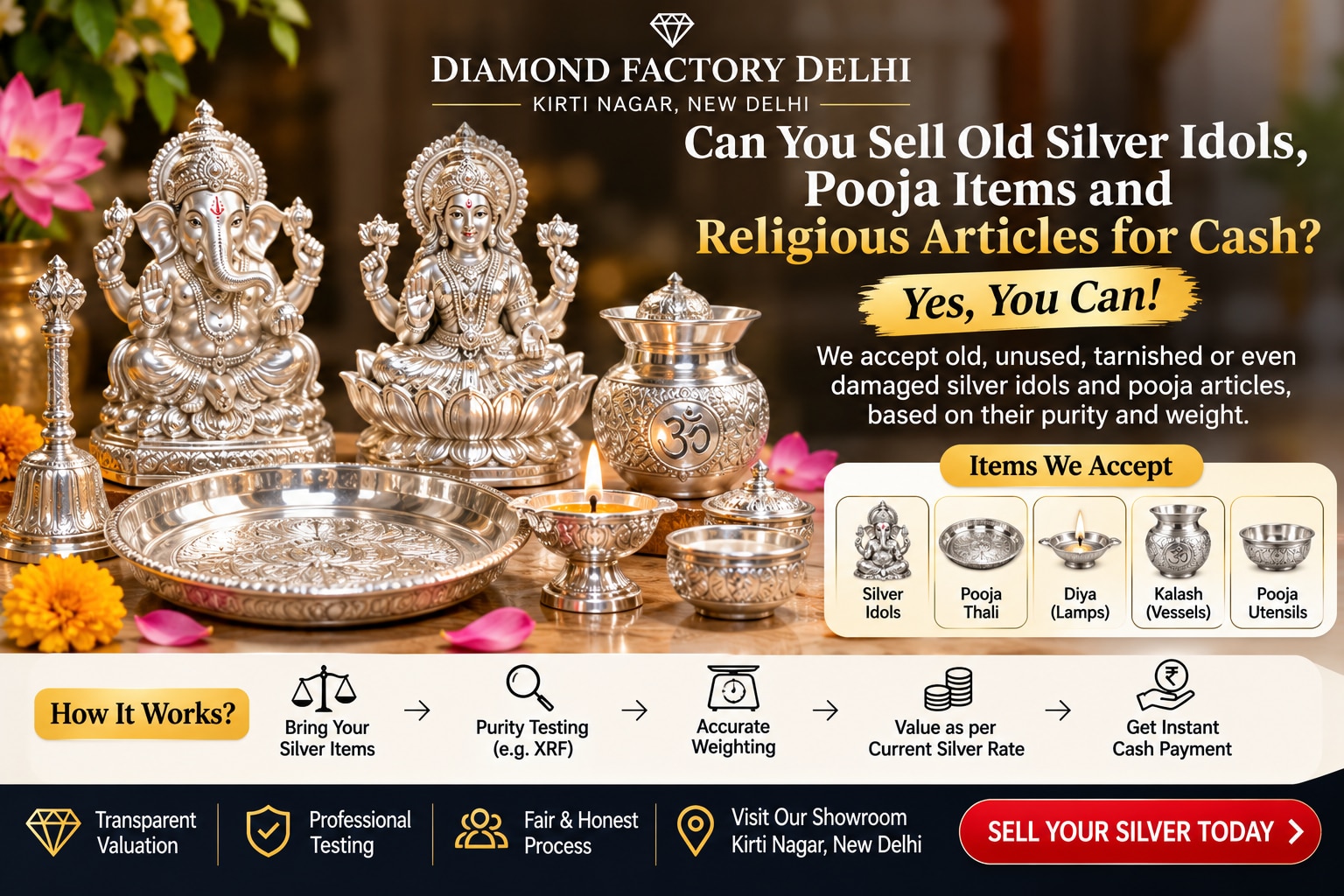
Can You Sell Old Silver Idols, Pooja Items and Religious Articles for Cash?
Many Indian households have silver idols, pooja thalis, silver diyas, bowls, coins and other religious silver articles that have been stored away for years. Some items may be old, damaged, tarnished or no longer in use.
But can you sell old silver idols, pooja items and religious articles for cash?
Yes, many silver buyers accept old silver religious articles, depending on their purity, weight, condition and the buyer's purchasing policy.
If you have unused silver items at home, understanding how silver valuation works can help you make an informed decision before selling.
In this guide, we explain which silver pooja items may have resale value, how silver purity is checked and what you should know before selling.
1. Can You Sell Old Silver Idols for Cash?
Yes, old silver idols may have resale value based on their actual silver content.
Indian households commonly keep silver idols of deities for worship, festivals, religious ceremonies and special occasions.
Examples include:
Silver Lakshmi idols.
Silver Ganesh idols.
Silver Krishna idols.
Silver Durga idols.
Silver Hanuman idols.
Silver Shivling.
Silver temple decorations.
Small silver religious statues.
Some idols may be antique-looking, tarnished or slightly damaged. Their appearance alone does not determine their silver value.
The actual value depends on factors such as silver purity, net weight and the applicable buying rate. If an idol has a hollow structure, mixed materials or decorative attachments, these may also affect its assessment.
2. Which Silver Pooja Items Can You Sell?
Apart from idols, many traditional pooja articles are made from silver and may be accepted by silver buyers.
Common examples include:
Silver Pooja Thali: Traditional silver plates used during daily worship and religious ceremonies.
Silver Diya: Silver lamps used during aarti, festivals and special occasions.
Silver Kalash: Religious vessels used during pooja and auspicious ceremonies.
Silver Bell: Traditional bells used in temples and home mandirs.
Silver Bowls and Spoons: Small silver utensils used for religious offerings.
Silver Panchpatra and Achmani: Traditional articles used during Hindu rituals.
Silver Incense Holders: Decorative and functional religious accessories.
Before selling, ask the buyer whether these specific items are accepted and how their silver purity will be assessed.
3. Can You Sell Old Silver Religious Articles That Are Damaged?
Yes, damaged silver articles may still have resale value if they contain genuine silver.
Examples include:
Broken silver diyas.
Bent silver pooja plates.
Damaged silver kalash.
Old silver bowls.
Cracked or incomplete silver utensils.
Silver articles with missing parts.
Tarnished religious silver items.
Silver can become dull or blackened over time due to exposure to air and other environmental factors. Tarnishing does not automatically mean that the item has lost its silver content.
Even if an article is no longer suitable for religious use, its silver content may still be valuable.
4. Does the Religious or Antique Design Increase Silver Resale Value?
Not always.
A silver idol or religious article may have artistic, historical or sentimental significance. However, a buyer purchasing silver primarily for its metal content may calculate the offer based mainly on purity and net weight.
There are two possible valuation approaches:
Metal-value assessment: The buyer evaluates the silver purity and weight to calculate its metal value.
Antique or collectible assessment: A specialist may consider age, craftsmanship, rarity, origin and collector demand.
If you believe your silver idol or religious article is antique or particularly rare, consider obtaining an expert opinion before selling it as scrap silver.
5. How Is the Value of Old Silver Pooja Items Calculated?
The resale value of silver articles generally depends on their net silver weight, purity and the applicable silver buying rate.
A basic valuation formula is:
Estimated Silver Value = Net Silver Weight × Applicable Pure Silver Rate × Purity Percentage
For example:
Suppose you have a silver pooja thali weighing 500 grams, with an assumed purity of 92.5%.
If the applicable pure silver rate is ₹100 per gram, the illustrative calculation would be:
500 × ₹100 × 92.5% = ₹46,250.
This is an example only, not a live silver price or guaranteed selling offer.
The actual amount may differ depending on testing results, non-silver components, the buyer's rate and any disclosed deductions.
6. How Is Silver Purity Tested Before Selling?
Silver articles can have different purity levels. Some may carry markings, while older religious items may have no visible hallmark.
A buyer may use suitable testing methods to assess silver purity.
Common assessment methods include:
Hallmark inspection: Checking available purity marks and identification details.
XRF testing: An instrument-based method that estimates the elemental composition of the tested surface.
Other purity tests: Depending on the item and buyer's testing process.
XRF testing is generally non-destructive, but surface-based readings may have limitations, particularly with plated, coated or mixed-material objects.
Ask the buyer to explain the testing method and how the final purity is determined.
7. What Should You Check Before Selling Silver Idols and Pooja Items?
Before selling your old silver articles, consider these important points:
Collect all the silver items you are considering selling.
Separate silver articles from brass, copper and stainless-steel items.
Check for visible purity marks or hallmarks.
Keep loose silver components together.
Ask how the purity will be tested.
Confirm the net silver weight.
Ask which silver rate is being applied.
Understand any deductions before accepting the offer.
Request a clear transaction receipt.
It is also sensible to compare offers from more than one buyer.
8. Should You Clean Old Silver Idols Before Selling?
You do not necessarily need to polish or clean old silver articles before getting them assessed.
Silver often develops a dark layer called tarnish. This can affect its appearance but does not automatically reduce its underlying silver content.
Avoid using harsh chemicals, abrasive materials or aggressive polishing methods, especially on antique or intricately designed idols.
If an item has collectible or religious significance, have it assessed carefully before attempting any cleaning or repair.
9. Is It Better to Sell Old Silver Pooja Items or Keep Them?
The decision depends on your personal circumstances.
You may consider selling silver articles if:
They are no longer being used.
They are damaged beyond practical use.
You have duplicate items.
You want to organise unused household valuables.
You prefer to convert unused silver into money.
However, religious articles may carry sentimental, cultural or family significance. Consider these factors before making a decision.
There is no need to sell an item simply because it is old or tarnished.
10. Where Can You Sell Old Silver Idols and Pooja Items?
If you are considering selling old silver religious articles, look for a buyer who clearly explains the testing and valuation process.
Before choosing a silver buyer, check:
Whether the buyer accepts religious silver articles.
Whether purity testing is explained clearly.
Whether weighing is done transparently.
Whether the applicable silver rate is disclosed.
Whether deductions are explained in advance.
Whether you receive a transaction receipt.
Whether ownership and identity requirements are followed.
A transparent process helps you understand how your silver articles are valued and what amount you can expect to receive.
Frequently Asked Questions (FAQs)
Q1. Can I sell old silver Lakshmi and Ganesh idols?
Yes, many silver buyers accept silver religious idols. Their value generally depends on silver purity, net weight and the applicable buying rate.
Q2. Can I sell old silver pooja thalis and diyas?
Yes, silver pooja thalis, diyas, kalash and other religious articles may be accepted, depending on the buyer's purchasing policy.
Q3. Can I sell tarnished or blackened silver items?
Yes, tarnishing does not automatically mean that silver has lost its metal value. The item should be assessed for purity and weight.
Q4. Can I sell broken silver religious articles?
Many buyers accept damaged or broken silver articles if their silver content can be assessed. The final offer depends on purity and net weight.
Q5. How do I know whether my pooja items are made of real silver?
Look for available hallmark or purity markings and ask for a suitable purity test. Appearance alone cannot reliably establish silver purity.
Q6. Does an antique silver idol have more value?
It may have additional collectible or antique value if it is rare or historically significant. Consider an independent antique assessment rather than assuming its value is based only on silver weight.
Q7. Can I sell silver articles without an original purchase bill?
Some buyers may accept silver articles without an original bill, subject to their ownership verification, identity requirements and transaction policies. Confirm the requirements beforehand.
Conclusion: Turn Your Unused Silver Articles into Value
Old silver idols, pooja thalis, diyas, kalash and religious articles may still have resale value even if they are tarnished, damaged or no longer in use.
The most important factors are silver purity, net weight and the applicable buying rate. If your item is antique or collectible, consider its possible additional value before selling.
Always choose a buyer who explains the purity-testing process, weighing method and final valuation clearly.
Have old silver idols, pooja items or religious silver articles? Explore your selling options and understand what your silver may be worth before making a decision.
Contact Us Today
📍 Location: 69/6A, Main Patel Road, Opp Pillar No 282 Near Kirti Nagar Metro Station, New Delhi 110015, New Delhi
📞 Phone: 9312093120
🌐 Website: www. labdiamondfactory.in
📩 Email: metrostudio1@gmail.com


